
Antibiotics for Intra-abdominal Infections
Advances in bacteriology and the introduction, of antibiotics with limited activity
against obligate anaerobes (e.g., aminoglycosides, cephalosporins), has refocused
the attention on the anaerobic nature of secondary peritonitis during the
1960's and 1970's. This prompted experimental studies that identified
E. coli and B.fragilis as the main target organism for therapy. Both
are also the most frequent isolates from intra-abdominal infections.
Today the practice of early empirical administration of antibiotics targeted
against these bacteria is being challenged by a more sophisticated calculated
design of antibiotic therapy that is based on concentration dynamics at the
site of infection, e.g peritoneal fluid in the abdominal cavity.
In addition, the choice and timing of administartion, the need for intra-operative
cultures and the duration of postoperative administration remain
controversial and is often influenced by the pharmaceutical industry that often were designed
as low-mortality studies to suggest that therapy with a broad-spectrum antibiotic
that includes incomplete activity
against obligate anaerobes might be equal, or superior to agents fully effective
against both facultative and obligate anaerobes. Patients in such series
have been cured of infection with antibiotics resistant to bacteria suggesting
that in many instances the source control operation alone was curative.
This confirms the pre-antimicrobial era revelation that operative source control
alone reduces the mortality rate from 90% to 40%; – without any anti-infective
agent at all (Krischner, M. Langbeks Archiv Chirurgie, 1923).
Value of Controlled Trials
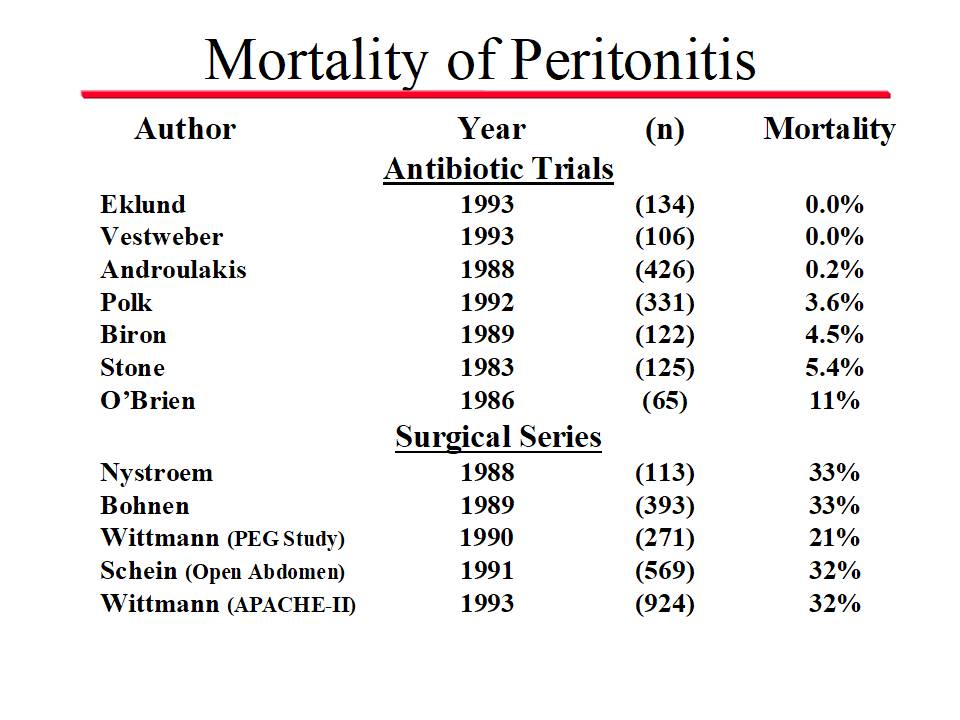
The true mortality of intra-abdominal infection reported in surgical series contrasts
sharply to industry driven antibiotic trials that consistently excludes severe
intra-abdominal infections and therefore makes these trials meaningless for
antibiotic choices
Unfortunately, the numerous prospective randomized studies about antibiotic
management of peritonitis exclude the sickest patients by study design.
Low mortality penetrating trauma cases that represent peritoneal contamination
rather than intra-abdominal infection dilute results. Consequently,
the average mortality rate is only 3.5% in the antibiotics studies (see table).
This sharply contrasts with the 33%, 33%, 21%, 32% and 29% mortality rates
of 113, 393, 271, 569 and 929 of non-selected cases and treated during the
same period, respectively.
Killing Target Bacteria
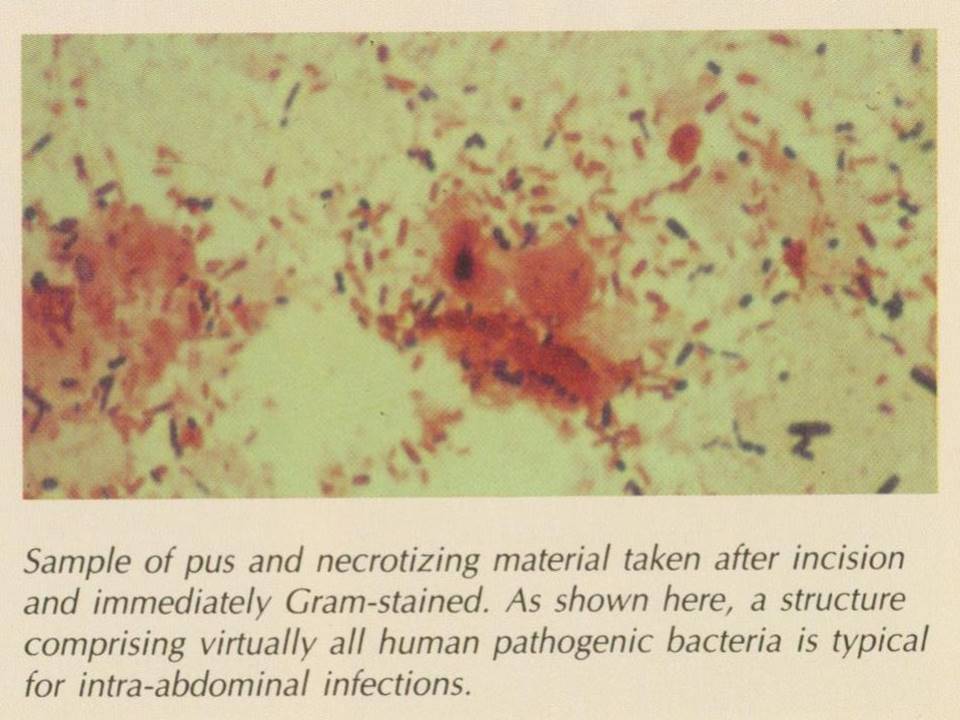
PIC of Gram stain of peritoneal fluid from a patient with peritonitis
In spite of the numerous options advertised, antibiotic therapy for secondary peritonitis
is simple. The emerging concepts suggest that less, in terms of the
number of drugs and the duration of treatment, is better. To hit the
primary endotoxin producing target organism, an antibiotic is required that
kills strains (of the target species) at the site of infection e.g. peritoneum
with a peritoneal fluid concentration of sufficiently level and duration until
the next administration.
Subinhibitory concentration in the peritoneum compartment must be avoided
because strains with higher MIC’s can survive and pose a major resistance
problem down the road.<>
For a synopsis of antibiotic therapy of calculated design, click here to paper calcuated antibiotic therapy>
Cephalosporins and Penicillins
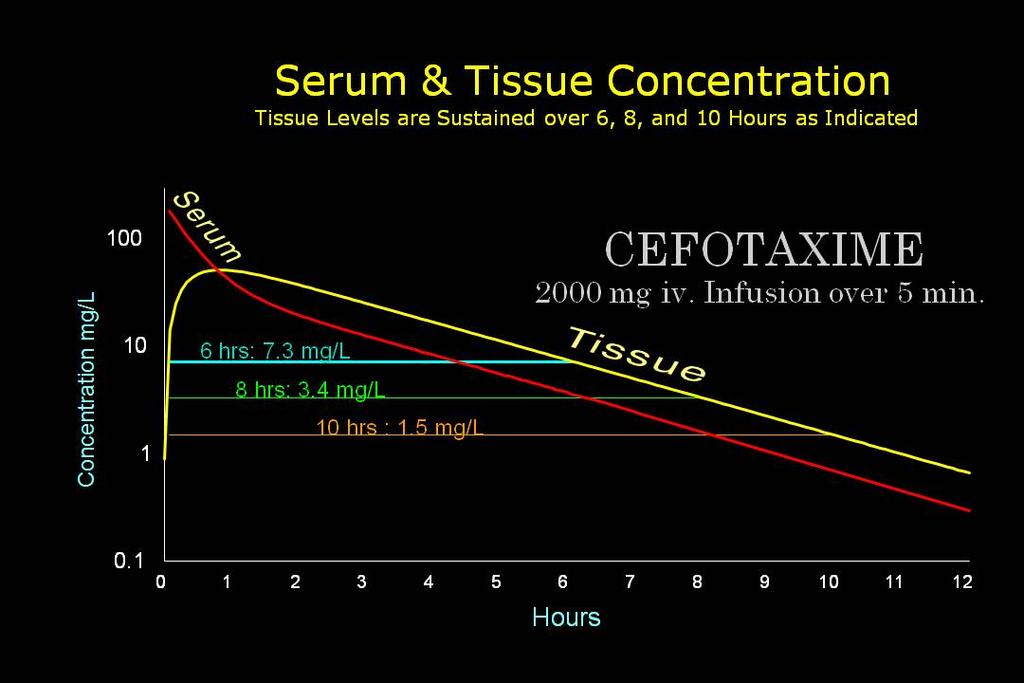
These beta-lactam antibiotics have a very similar pharmacokinetic behavior. After IV injection two procersses dominate kinets: 1. Diffusion from the central compartmet into the (global) peripheral compartment until concentrtation equilibrum berween compartments is reached. 2. Simulatneous elimination from the peripheral compartment into the central compartment and clearance from the central compartment via mainly renal or hepatic routes. In the example below antibiotic movements are shown graphically. It also shows that certain concentration of drugs are available for a give time only depending ont the elimination processes. These concentration must surpass the concentrations at which bacteria cannot survive for antibiotic therapy to be effective.
 3333
3333Third Generatios Cephalosporind
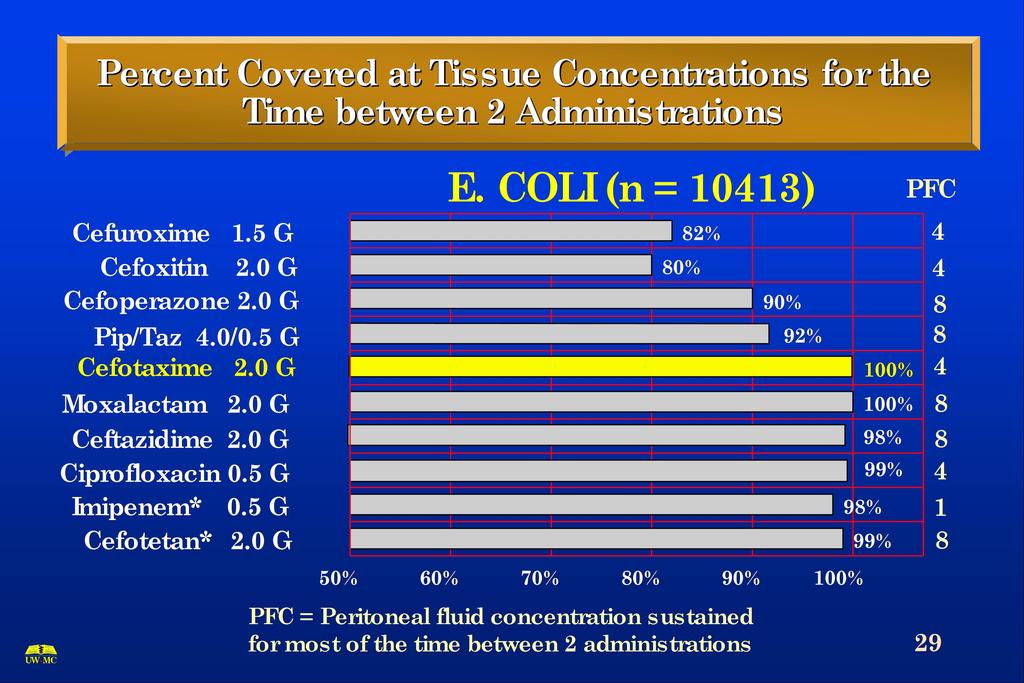
Third generation cephalosporins such as cefotaxime, ceftizoxime, cefmenoxime, moxalactam
and ceftriaxone were the first ß-lactam antibiotics with a 100% activity
against target organism E.coli at tissue levels . In 104 studies none of 10478
strains of E.coli tested had a minimal inhibitory concentration (MIC) in excess
of the concentrations achieved in the peritoneum with a two gram dose. (Figure)
None of the penicillins, even when combined with ß-lactamase inhibitors
achieves similar results with doses used in clinical practice.
Pathogens killed at tissue levels
EC
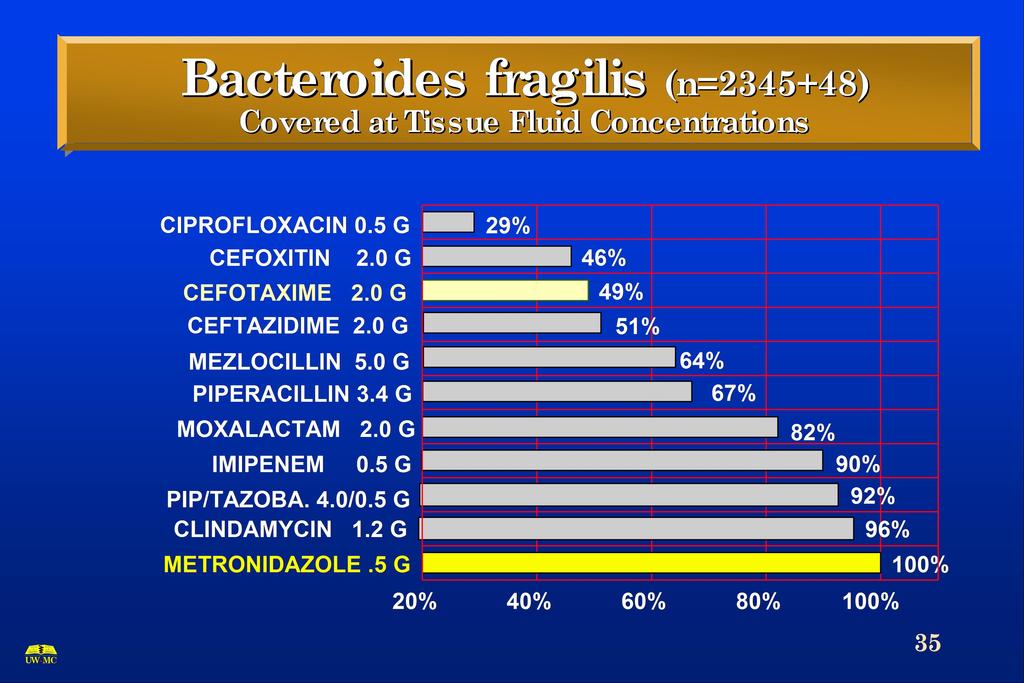
BF
Third Generatios Cephalosporindos
Third generation cephalosporins such as cefotaxime, ceftizoxime, cefmenoxime, moxalactam and ceftriaxone were the first ß-lactam antibiotics with a 100% activity against target organism E.coli at tissue levels . In 104 studies none of 10478 strains of E.coli tested had a minimal inhibitory concentration (MIC) in excess of the concentrations achieved in the peritoneum with a two gram dose. (Figure) None of the penicillins, even when combined with ß-lactamase inhibitors achieves similar results with doses used in clinical practice.
Aminoglycosides
The once popular 'triple' regimen of the 1970's (ampicillin, an aminoglycoside, and metronidazole or clindamycin) has become obsolete. Aminoglycosides are significantly more nephrotoxic than for example the third generation cephalosporins, are inefficient in the low pH of the infected peritoneal environment, and are no longer the first choice of antibiotics in the initial treatment of IAI. The enterococcus, which is frequently isolated in experimental and clinical peritonitis, is almost clinically non-significant except its role as a co-factor for B.fragilisin the formation of abscesse. Thus it does not require a 'coverage' with ampicillin if the obligate anaerobes (e.g.B. fragilis are adequately 'covered' by metronidazole or clindamycin.
Carbapenems
Imipenem, a carbapenem derivative, has broad activity against facultative and obligate
Gram-negative anaerobes and excellent Gram-positive activity (excepting methicillin-resistant
Staphylococci. Its Achilles tendon is its marginal activity against
Proteus mirabilisat peritoneal fluid levels following the 500 mg dose.
Proteus mirablils is another, gram negative target organisms causing lethal
sepsis. Following the 1-gram dose, a much higher proportion of this pathogen
is covered at the site of infection.
It is therefore better to give 1000 mg iv every 8 hours instead of 500 mg every 6 hours to the majority of patients that have an age related diminished elimination of the drug. The benefits of success far outweigh the risk for seizures with that dosage.
Imipenem is formulated with cilastatin, a renal dehydropeptidase inhibitor which prevents renal tubal epithelial metabolism of the drug. It also prevents tubular cell damage by preventing accumulation of toxic byproducts of the many drugs given to an intensive care patient. This nephroprotective effect of the imipenem/cilastatin combination should favor its clinical use.
Meropenem is a synthetic agent with a typical broad carbapenem antibacterial spectrum. Several clinical trials in which serious intra-abdominal infections were treated with meropenem dosed at 1 g every 8 hours have shown considerable efficacy. It is not combined with a dipetidase inhibitor.
Fluoroquinolones
The currently marketed fluoroquinolones are active against facultative and
aerobic Gram-negative bacteria. Streptococci and Enterococci show in vitro
susceptibility to quinolones but other, more effective agents are available.
Staphylococcus aureus and coagulase-negative Staphylococci have become progressively
more resistant to fluoroquinolones. These drugs should be considered only
as a last resort for treatment of infections caused by multiply antibiotic-resistant
Gram-positive strains, and only in combination with other anti-staphylococcal
drugs.
A primary virtue of the quinolones is a very large volume of distribution
meaning that high concentrations are available in tissue when related to the
dose given. Because of their relatively small molecular size and absence of
localized electrical charges, these agents penetrate well into interstitial
fluid and achieve high tissue levels, in excess of those seen with other,
larger molecules.
A major benefit of currently available quinolones, as compared with β-lactam
agents, is continuing activity against Enterobacterand other
species which have inducible -lactamases. Another advantage of quinolone
therapy ,the potential for oral treatment of serious Gram-negative infections,
does not aplly often to patients with intra-abdominal infections. There are
a variety of clinical situations, however, in which prolonged therapy is
considered appropriate. These include hepatic abscesses and nosocomial pneumonia.
The next generation of quinolones is have substantially expanded spectra
of activity including many ciprofloxacin-resistant Gram-negatives, Gram-positives,
and many anaerobic organisms, including Bacteroides fragilis. These agents
also appear to have considerable potential for both gene damage and photosensitization,
and their futures remain unclear.
Quinolone-metronidazole ombination
As clinical experience has accumulated, quinolone antibiotics appear to be
potentially useful for serious systemic infections. These agents act by inhibiting
DNA replication, and have shown similar activity to imipenem in clinical
trials for pneumonia and intra-abdominal infection. Available quinolones
have little anti-Bacteroides fragilis activity and should be combined with
metronidazole in intra-abdominal infection
Duration of antibiotics
The trend to continue administration of antibiotics for fixed periods is no longer justified. A recommendation of the Surgical Infection Society that the conditions representing ‘simple’ (simple cholecystitis, appendicitis, etc.) intra-abdominal infection do not require therapeutic postoperative antibiotics is an important rule towards limiting the currently prevailing practices of excessive antibiotic prescription. Further changes in the current practices may be possible to minimize postoperative administration by intra-operative stratification of the extent of infection, tailoring the duration of therapy to operative findings, which will also limit the need for oral continuation of intravenous antibiotics.
Antibiotic therapy should be started as early as possible after diagnosis
as it also helps to reduce endotoxemia. Specific, directed treatment is not
possible, however, because the infecting microorganisms and their sensitivities
are not precisely known and microbiologist were unable to develop a test that
provides instant identification and and required inhibitory concentrations.
Consequently, the choice of antimicrobial must be based on other criteria.
Antimicrobial therapy should be directed against the most frequently expected
pathogens and achieve an antimicrobially active concentration of drug at the
site of infection. The potential for adverse interaction of antibiotics with
host defenses, and possible toxic effects such as the ototoxicity of aminoglycosides,
must also be considered. Controlled clinical trial reports of antimicrobial
efficacy are often of little help; the most severely diseased patients have
been excluded from most trials. Necrotizing fasciitis and other forms of extension
of infection to the surgical wound represent catastrophic failures of antimicrobial
treatment.
[For more detailed information click here]
References
- Altemeier WA: The cause of the putrid odor of perforated appendicitis with peritonitis. Ann Surg 107:634, 1938.
- Altemeier WA: The pathogenicity of the bacteria of appendicitis peritonitis. Surgery 11:374, 1942.
- Bartlett KG, Onderdonk AB, et at: A review. Lessons from an animal model of intra abdominal sepsis. Arch Surg 113:853, 1978.
- Berne TV, Yellin AE, Appleman MD, Gill MA, Chenella FC, Heseltine PN: Surgically treated gangrenous or perforated appendicitis. A comparison of aztreonam and clindamycin versus gentamicin and clindamycin. Ann Surg 1987;205:133 137
- Bieluch VM, Cuchural GJ, Snydman DR, Gorbach SL, Tally FP: Clinical importance of cefoxitin resistant Bacteroides fragilis isolates. Diagn Microbiol Infect Dis 1987;7:119 126
- Blazer J, Stone BB, Zinner SH: Efficacy of intermittent versus continuous administration of netilmicin in a two compartment in vitro model. Antimicrob Agents Chemother 27:343 349, 1985
- Bodenham A, Shelly MP, Park GR: The altered pharmacokinetics and pharmacodynamics of drugs commonly used in critically ill patients. Clin Pharmacokinet 14:347 373, 1988
- Bohnen JMA, Solomkin JS, Dellinger EP, et al: Guidelines for clinical care: anti infective agents for intra abdominal infection. Arch Surg 127:83 89, 1992
- Chow JW, Fine MJ, Shlaes DM, et al: Enterobacter bacteremia: Clinical features and emergence of antibiotic resistance during therapy. Ann Intern Med 115:585 590, 1991
- Chow JW, Fine MJ, Shlaes DM, et al: Enterobacter bacteremia: 10. Collee JG: Factors contributing to loss of anaerobic bacteria in transit from the patient to laboratory. Infection 8:145, 1980.
- Drasar BS, Hill MJ: Human Intestinal Flora. London, Academic Press, 1974.
- Elek SD, Conen PE: The virulence of Staphylococcus pyogenes for man: A study of the problems of wound infection. Br J Exp Pathol 38:573, 1957.
- Enander L K, Nilson F, et al: The aerobic and anaerobic microflora of the gastric remnant more than 15 years after Billroth II. Scand J Gastroen¬terol 17:715, 1982.
- Chow JW, Fine MJ, Shlaes DM, et al: Enterobacter bacteremia:
- Finegold SM: Anaerobic Bacteria in Human Disease. New York San Francisco London, Academic Press, 1977.
- Friedrich PL: Bacteriological ecology and treatment of diffuse peritonitis (German). Arch Klin Chir 68:524, 1902.
- Gerding DN, Hall WH: The penetration of antibiotics into peritoneal fluid. Bull NY Acad Med 51:1016, 1975.
- Gorbach SL, Bartlett JG: Anaerobic infections. N Engl J Med 290:1177, 1974.
- Greenlee HB, Gelbart SM, et al: The influence of gastric surgery on the intestinal flora. Am J Clin Nutrit 30:1286, 1977.
- Hau T: Bacteria, toxins and the peritoneum. World J Surg 167, 1990.
- Hilf M, Yu VL, Sharp J, et al: Antibiotic therapy for Pseudomonas aeruginosa bacteremia: Outcome correlations in a prospective study of 200 patients. Am J Med 87:540 546, 1989<
- Jacobus NV, Cuchural GJJr, Tally FP: In vitro susceptibility of the Bacteroides fragilis group and the inoculum effect of newer beta lactam antibiotics on this group of organisms. J Antimicrob Chemother 1989;24:675 682
- Lau WY, Fan ST, Yiu TF, Poon GP, Wong SH: Prophylaxis of postappendicectomy sepsis by metronidazole and cefotaxime; a randomized, prospective and double blind trial. Br J Surg 1983;70:670 672
- Lennard ES, Dellinger EP, Wertz MJ, Minshew BH. Implications of leukocytosis and fever at conclusion of antibiotic therapy for intra-abdominal sepsis. Ann Surg 1982; 195:19-24
- Malangoni MA, Condon RE, Spiegel CA: Treatment of intra abdominal infections is appropriate with single agent or combination antibiotic therapy. Surgery 1985;98:648 655
- Meleney FL, Ollp J, et al: Peritonitis: II. Synergism of bacteria commonly found in peritoneal exudates. Arch Surg 25:709, 1932.
- Mollitt DL, Tepas JJ III, et al: The microbiology of neonatal peritonitis. Arch Surg 123:176, 1988.
- Nichols RL, Smith JW: Intragastric microbial colonisation in common disease states of the stomach and duodenum. Ann Surg 182:557, 1975.
- Nichols RL, Smith JW, et al: Efficacy of parenteral antibiotics in the treatment of experimentally induced intra-abdominal sepsis. Rev Infect Dis 1:302, 1979.
- Noon GP, Beall AC, et al: Clinical evaluation of peritoneal irrigation with antibiotic solution. Surgery 62:73, 1967.
- Nystrom P O, Johansson L, et al: Intraoperative saline irrigation of the peritoneal cavity in experimental post traumatic peritonitis. Acta Chir Scand 149:509, 1983.
- Onderdonk AB, Bartlett JG, et al: Microbial synergy in experimental intra-abdominal abscess. Infect Immun 13:22, 1976.
- Sanders WEJ, Sanders CC: Inducible beta lactamases: clinical and epidemiologic implications for use of newer cephalosporins. Rev Infect Dis 1988;10:830 838
- Schein M, Wittmann DH, Wise L, Condon RE. Abdominal contamination, infection and sepsis: a continuum. [Review] [49 refs]. British Journal of Surgery 1997 Feb;84(2):269-72.
- Schoentag JJ, Plat ME, et al: Aminoglycoside nephrotoxicity in critically ill surgical patients. J Surg' Res 26:270, 1979.
- Solomkin JS, Meakins JL, et al: Antibiotic trials in intra-abdominal infections: A critical evaluation of study design and outcome reporting. Ann Surg 201:29, 1984.
- Solomkin JS: Use of new beta lactam antibiotics for surgical infections. Surg Clin North Am 68:1, 1988.
- Solomkin JS, Dellinger EP, Christou NV, Busuttil RW: Results of a multicenter trial comparing imipenem/cilastatin to tobramycin/clindamycin for intra-abdominal infections. Ann Surg 1990;212:581 591
- Stone HH, Kolb LD, et al: Incidence and significance of intraperitoneal anaerobic bacteria. Ann Surg 181:705, 1975.
- Swenson RM, Lorber B, et al: The bacteriology of intra-abdominal infections. Arch Surg 109:398, 1974.
- Vogelman B, Gudmundsson S, Leggett J, Turnidge J, Ebert S, Craig WA: Correlation of antimicrobial pharmacokinetic parameters with therapeutic efficacy in an animal model. J Infect Dis 1988;158:831 847
- Wells CL, Rotstein OD, et al: Intestinal bacteria translocate into experimental intra abdominal abscesses. Arch Surg 121:102, 1986.
- Wittmann DH: Chemotherapeutic principles of difficult to treat infections in surgery. I. Peritonitis. Infection 8:323, 1980.
- Werner H, Wittmann DH, et al: Metronidazol. Munchen, Futuramed-Verlag, 1983.
- Wittmann DH, Schassan HH: Penetration of eight beta lactam antibiotics into peritoneal fluid. Arch Surg 112:205, 1983.
- Wittmann DH, Teichmann W. Therapy for pathogenic bacteria in diffuse peritonitis by scheduled relaparotomies. Langenb Arch Chir 1985;366:629.
- Wittmann DH, Kellinghusen C, et al: Intra abdominal infections: Results of a controlled study. Akt Chir 18:229, 1983. Wittmann DH, Bergstein JM, et al: Calculated empiric antimicrobial therapy for mixed surgical infections. Infection 19:S345, 1991.
- Wittmann DH. Immunological consequences of antibiotic therapy. In: Engemann R, Holzheimner RG, Thiede A, editors. Recent developments in immunology: potential clinical impact on surgery and the treatment of infections. 1 ed. Berlin, Heidelberg, New York: Springer Verlag; 1994. p. 218-23.
- Wittmann DH, Schein M. Let us shorten antibiotic prophylaxis and therapy in surgery. [Review] [46 refs]. American Journal of Surgery 1996; 172(6A):26S-32S.
- Wittmann DH. Duration of antibiotic treatment in surgical infections of the abdomen. Pharmacokinetic basis for short courses of antimicrobial therapy. Eur J Surg Suppl 1996;(576):19-23.
- Wittmann DH. Pharmacokinetic basis for short courses of antimicrobial therapy. Eur J Surg 1996.
- Wittmann DH, Bergstein JM, Frantzides CT, Schein M, Holzheimer R, Condon RE. Calculated empiric antimicrobial therapy for mixed surgical infections Hypothesis: compartmentalization of cytokines in intraabdominal infection. [Review]. Surgery 1996;119(6):694-700.
- Wittmann DH, Jones RN, Malledant J, Privitera G. Cefotaxime in the treatment of prophylaxis of surgical infections. [Review] [70 refs]. Journal of Chemotherapy 1997 May;9 Suppl 2:19-33.
- Wittmann DH. Operative and nonoperative therapy of intraabdominal infections. Infection 1998 Sep;26(5):335-41.
- Wittmann DH. When to discontinue antibiotics in planned relaparotomies [comment]. Eur J Surg 1998 Nov;164(11):831-2.
- Wittmann DH, Wittmann-Tylor A. Scope and limitations of antimicrobial therapy of sepsis in surgery. [Review] [96 refs]. Langenbecks Archives of Surgery 1998 Mar;383(1):15-25.
- Yellin AE, Heseltine PN, Berne TV, Appleman MD, Gill MA, Riggio CE, Chenella FC: The role of Pseudomonas species in patients treated with ampicillin and Sulbactam for gangrenous and perforated appendicitis. Surg Gynecol Obstet 1985;161:303 307